

For a country where some of the most extraordinary landscapes still require a long ferry ride, a winding road, or a small leap of patience, India’s next aviation chapter may begin not on a runway, but on water. The country is now preparing to launch its first dedicated commercial seaplane service, a move that could quietly reshape how travellers reach some of its most remote corners—starting with Lakshadweep.
SkyHop Aviation, the company leading the initiative, has received an Air Operator Certificate from the Directorate General of Civil Aviation (DGCA), making it the first airline in India to be formally cleared to operate scheduled commercial seaplane services. It is a significant regulatory milestone for a concept India has flirted with before, but never fully integrated into its travel ecosystem.
Unlike traditional aircraft, seaplanes are designed to take off and land on water. Some use floating pontoons attached beneath the fuselage, while others are built with a hull-shaped body that allows them to glide directly onto lakes, rivers or coastal waters. For a country with an expansive coastline, island territories and an intricate network of inland water bodies, the model feels less like novelty and more like a practical evolution.
Islands First
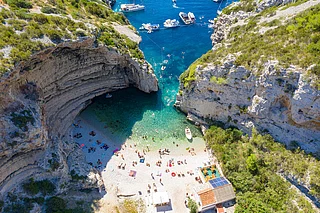
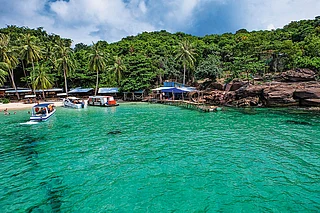
The first phase of operations is expected to begin in Lakshadweep, where geography has long dictated the pace of movement. Spread across the Arabian Sea, the archipelago’s islands are stunning but logistically challenging, with limited airport infrastructure and heavy dependence on boats for inter-island travel. Journeys that can consume hours at sea may soon be reduced to short aerial hops over turquoise waters.
SkyHop plans to begin with 19-seater aircraft that will connect five islands within Lakshadweep while also linking them to the Indian mainland. For residents, that could mean faster access to healthcare, education and essential services. For travellers, it opens up the possibility of moving between islands with far greater ease, making a multi-island itinerary in Lakshadweep feel considerably more realistic.
The airline has already conducted successful water take-offs and landings during recent trials in Rishikesh, demonstrating that the operational side of seaplane travel can work in Indian conditions. Those test runs were an important step in moving the idea from policy discussions into something more tangible.
Beyond Runways
What makes the development particularly compelling is what it could mean beyond Lakshadweep. Much of India’s difficult terrain—whether in coastal belts, riverine regions or hill districts—does not always lend itself to conventional airport construction. In places where building a runway is either expensive, environmentally sensitive or physically impossible, water can become the landing strip.
That creates opportunities for improved regional connectivity in areas that often remain outside mainstream aviation routes. Backwater destinations in Kerala, remote river settlements in the Northeast, and lesser-accessible stretches of the Andaman and Nicobar Islands could eventually become part of a wider seaplane network if the model proves commercially viable.
For the tourism industry, that could be transformative. Destinations once considered too cumbersome for short leisure breaks may suddenly become more accessible, giving travellers a chance to reach places that have often remained the preserve of the determined.
Scenic Future Ahead


India has experimented with seaplanes in the past, but previous attempts largely remained isolated demonstrations rather than a sustained commercial model. This time, the approval of a licensed operator suggests a more structured beginning, one that could finally move seaplanes from curiosity to credible transport option.
Of course, the success of the service will depend on more than regulatory approval. Infrastructure on the water, weather conditions, operating costs and environmental concerns will all shape how quickly the sector expands. But for now, the idea of boarding a flight that lifts gently from the sea rather than a crowded airport tarmac feels like a distinctly different kind of Indian travel story.
And in a country where the journey often matters as much as the destination, arriving by water may soon become part of the adventure itself.
FAQs
1. Where will India’s first commercial seaplane service begin?
The service is expected to begin in Lakshadweep.
2. Which company will operate the seaplane service?
SkyHop Aviation has received approval to operate the flights.
3. What is a seaplane?
A seaplane is an aircraft designed to take off and land on water.
4. How many passengers will the aircraft carry?
The initial service is expected to use 19-seater aircraft.
5. Why is this important for travellers?
It could significantly reduce travel time between islands and remote coastal regions.